We are talking about a brand that is very well-known in Hungary — and far beyond its borders as well.
Adrián Balla
Senior Consultant, Virgo
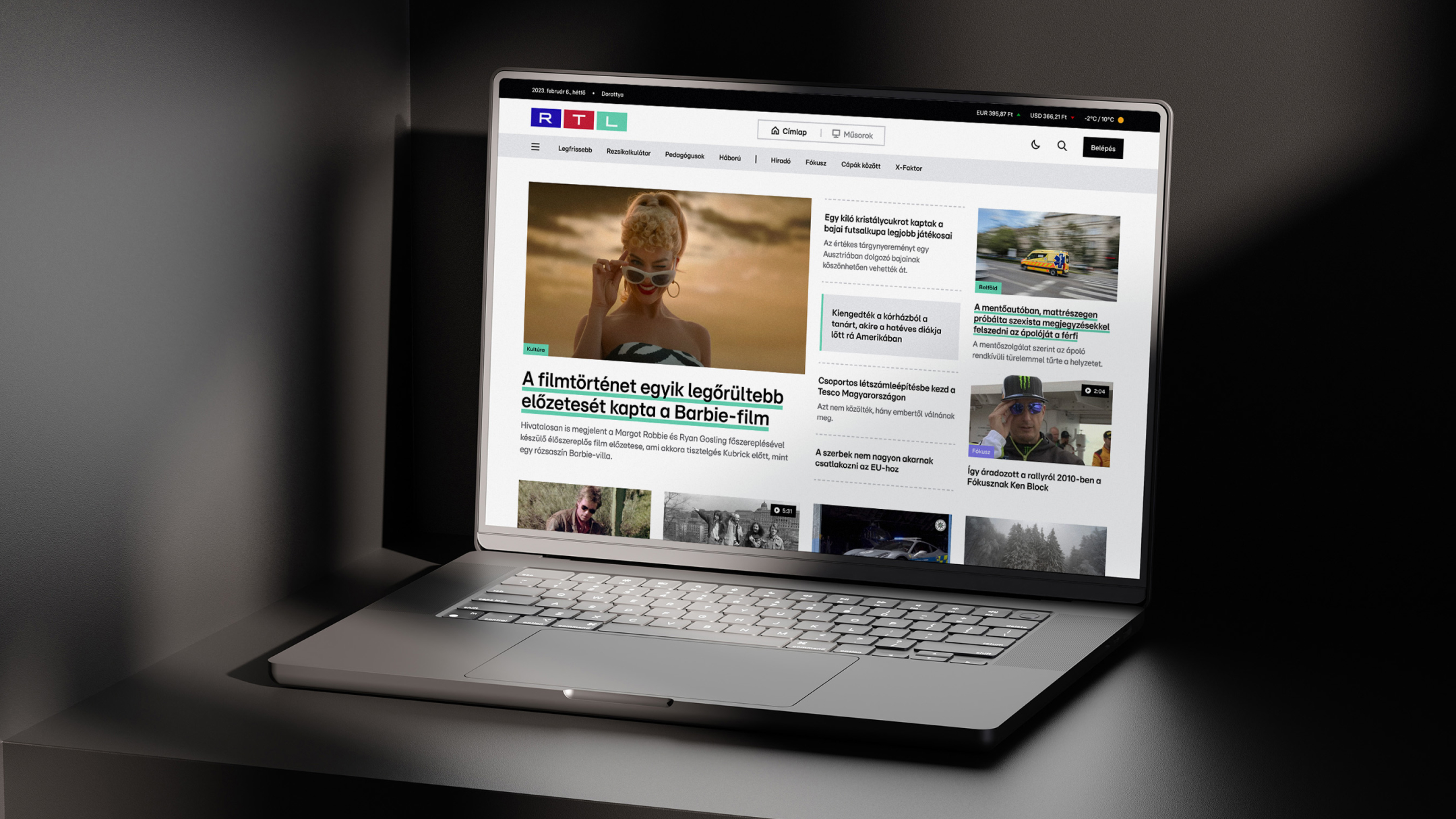
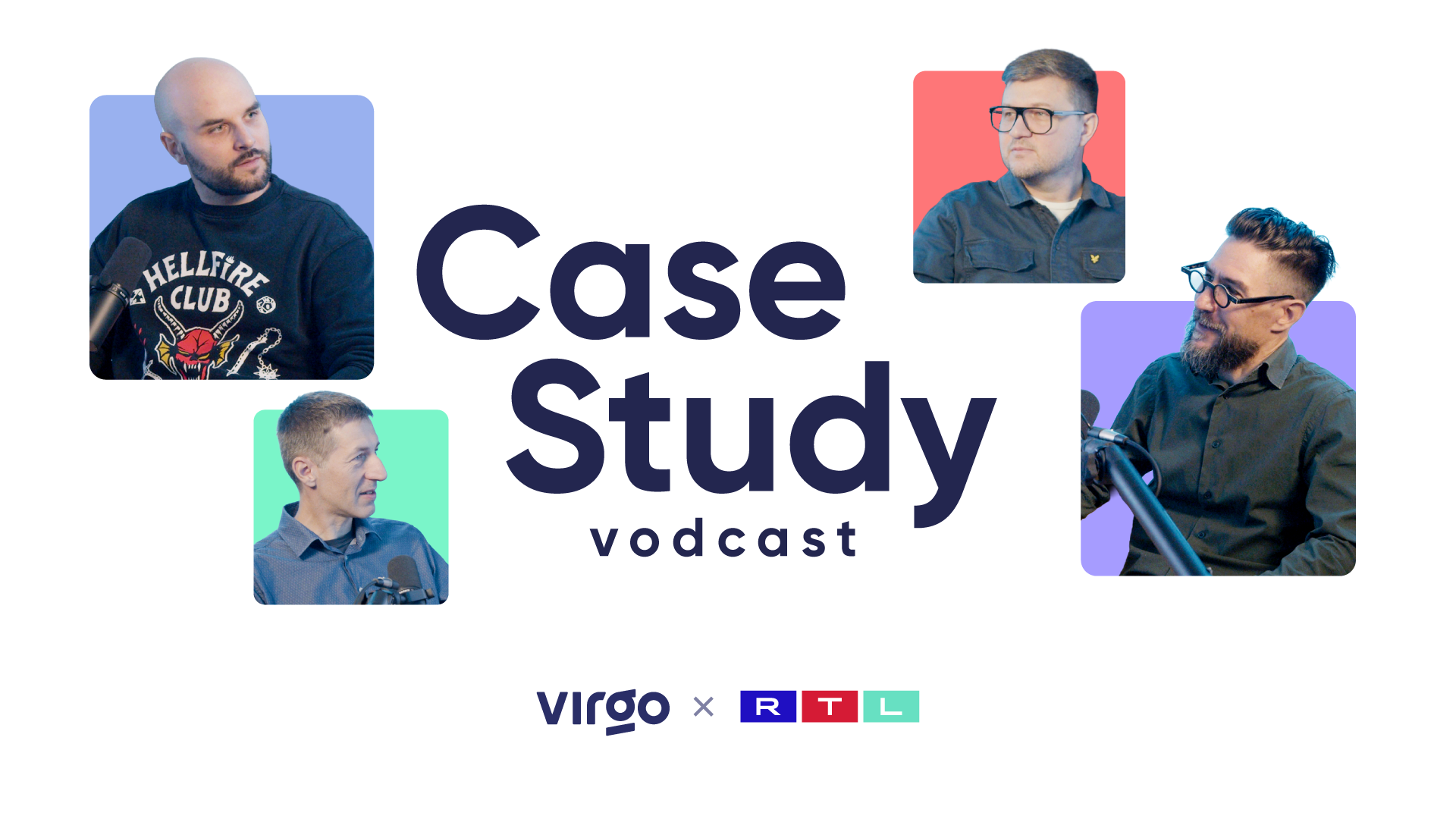
There are clients you have to explain, and there are those whose names speak for themselves. RTL clearly belongs to the latter category.
We are talking about a brand that is very well-known in Hungary — and far beyond its borders as well.
Working with a brand like this is both a privilege and a responsibility. Its digital presence is not merely a communication channel but a business-critical infrastructure: news sites, mobile applications, VOD platforms, live voting solutions, and advertising systems together form an ecosystem that serves hundreds of thousands of users daily — and, at peak moments, even several million.
People ask where you work. At Virgo. That doesn’t really mean much to them. Then you start listing it: we are the ones developing RTL, yes, the voting system too, and rtl.hu, and the app as well — and then they get it.
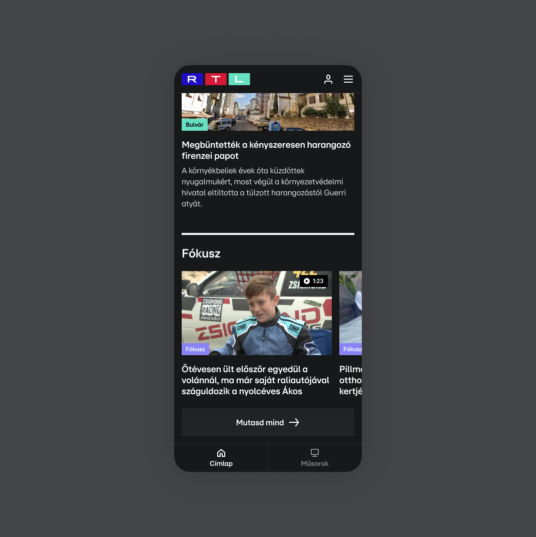
When Virgo won the tender in 2019 to redesign rtl.hu, it was clear from the very beginning that this would not be a classic redesign project. The task was to transform a live, business-critical system used on a daily basis, on tight deadlines and within an existing infrastructure. Although the brief primarily focused on design and frontend renewal, Virgo already approached the project as a brownfield development. The solutions had to fit into the existing system while remaining scalable and maintainable in the long term.
During the first project, the goal was to redesign rtl.hu, a platform built around a video-first mindset. In the second project, we were tasked with renewing the site’s functionality as well — basically, Virgo was asked to create a full-scale news site.
At first, they wanted to create a video-first website, sort of a cross between YouTube and a news site (…) so they would actually have a purpose for the platform, rather than just having a website simply because RTL needs one.
Virgo’s task extended far beyond refreshing the visual appearance. The team was responsible for designing the entire UX/UI concept as well as delivering both frontend and backend development, ensuring optimal performance across web and mobile platforms alike.
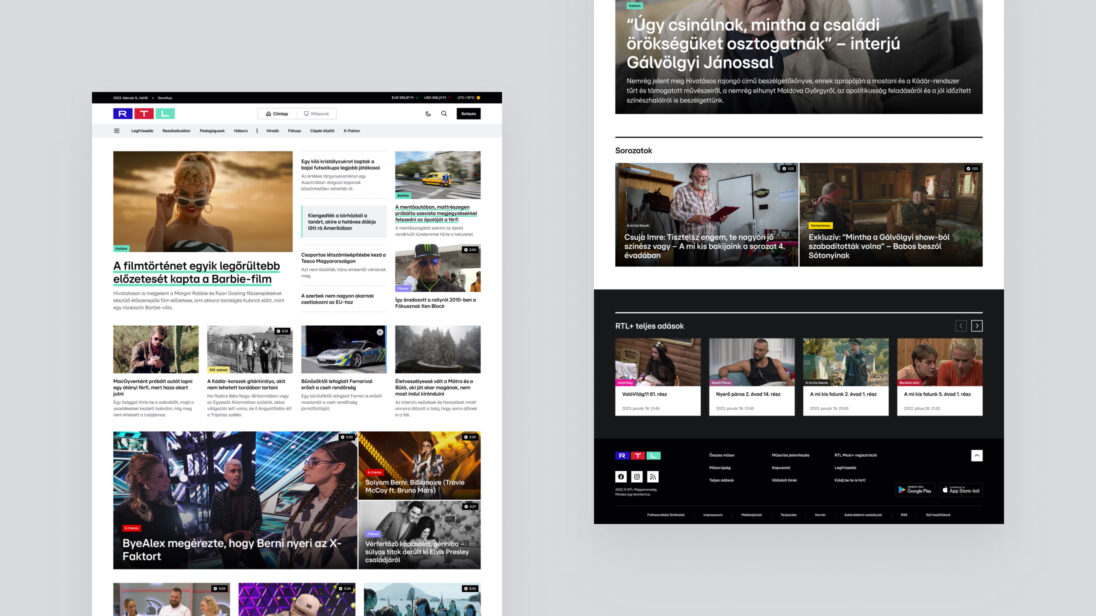
The greatest challenge was the integration of various content types. The platform had to simultaneously accommodate live TV broadcasts, show-videos and text-based news, while ensuring a unified and coherent user experience. We needed to develop UX solutions that supported the editorial team’s new operating model and ensured stable performance even under heavy traffic.
All of this took place during a period when, prior to the rebranding, the site had to remain recognizable and usable with temporary visual elements in place, while the forward-looking concept had already been defined.
Virgo began the work with UX research to uncover editorial, business, and user needs. In-depth interviews were conducted with leaders from various areas of RTL to understand the future model of content creation, monetization expectations, and operational challenges.
Mapping user journeys helped reveal how visitors navigate the site, what types of content they consume, and where it makes sense to encourage further content consumption. The homepage, the article pages, and the show pages went through multiple iterations, with continuous alignment with the RTL team to harmonize business, editorial, and technological considerations.
The visual concept was built on a long-term, sustainable, and extensible design system. The work started with mood boards and the definition of visual directions, resulting in a UI direction that paved the way for the rebranding, while temporary visual elements ensured recognizability during the transition period.
The design system provided a unified approach to colors, typography, grids, and components, laying the foundation for future platform expansions and adaptation to other digital surfaces.
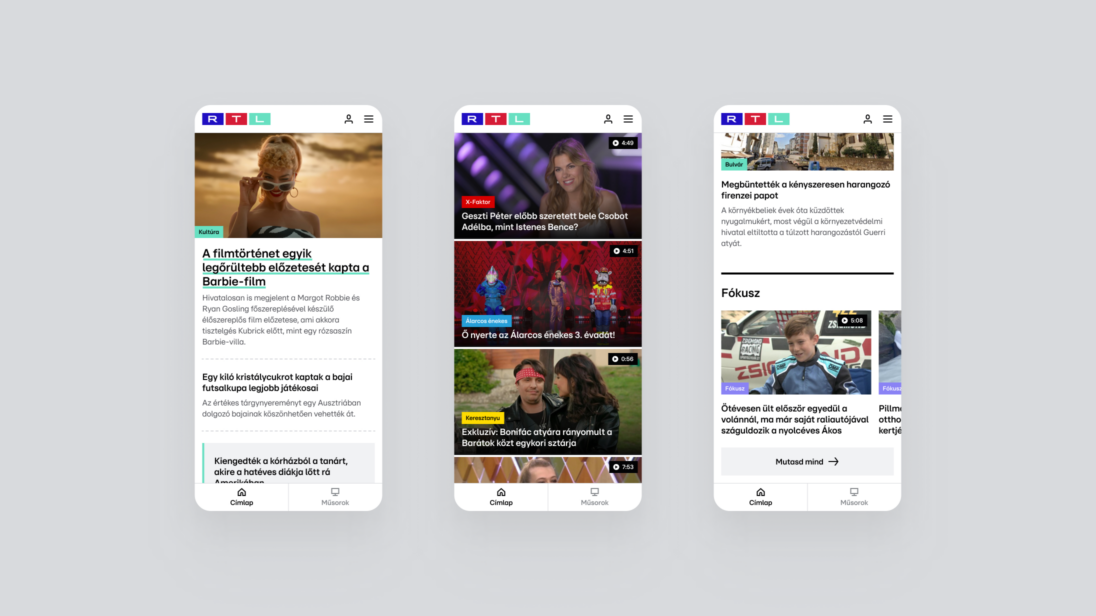


Virgo built a modern, Vue.js 3–based single-page application with server-side rendering to ensure SEO and performance. Dynamic content was delivered via REST APIs, and the system was integrated with external authentication and push notification solutions. The development approach was cross-platform, enabling web and mobile applications to be developed in parallel in a cost-efficient manner.
Following the successful launch, the collaboration quickly expanded. More and more tenders followed, now affecting not only the website but the entire digital presence: reimagining design systems, developing the news portal, mobile applications, VOD-related solutions, and campaign sites.
In the meantime, a completely custom homepage editor was created behind rtl.hu, integrated directly into the existing CMS. This tool allowed editors a high degree of freedom in shaping the homepage, while the technical framework ensured consistency and stability.
The editors were given a tool with which they could solve almost anything on the homepage.
The collaboration did not operate on a project-by-project basis but through continuous support. New needs, new content and business goals emerged, to which Virgo responded quickly and as a partner. During this period, Virgo’s role went far beyond classic development tasks. The team maintained a constant presence: supporting, maintaining, and thinking together with RTL’s digital team about new requirements, business objectives, and content directions.
One of the biggest challenges of the collaboration was the digital voting systems connected to live shows. Voting for X-Factor and other entertainment programmes generated traffic spikes that are difficult to prepare for using traditional planning methods. As a result, the mobile application and voting system associated with X-Factor was not only a development challenge but also an operational one.
What surprised me the most is how much power TV still holds today. When the host says live on air that everyone should take out their phones and go to the RTL mobile app, and suddenly ten thousand users arrive — that’s not easy to handle.
Scalability, stability, and the legal environment (studio, notary, live production) all came into play at the same time. Virgo’s team was present at RTL’s headquarters during live broadcasts, working closely with operations and production teams. The first live vote that ran stably was a major milestone: confirmation that the architecture, operations, and collaboration all performed well in a live environment.

The RTL-project was a defining milestone for Virgo from an internal perspective as well. This was where the operating model truly matured — one in which design and development are not sequential steps but parts of a single, shared thinking process.
We were literally sitting next to each other: while designing, we were already thinking about how it would be developed — and vice versa.
Component-based design, shared prototyping, and immediate technical feedback made it possible for planned solutions to take development, maintenance, and scalability considerations into account from the very moment they were created.
We knew that what we designed, we would also be able to develop.
This confidence defined the project from start to finish and later became one of Virgo’s core strengths in other collaborations as well.
They trust us with new projects, new technologies, and new requirements they want to realize — that is very clear feedback for me.
Over the years, the relationship gradually evolved from a client–vendor setup into a genuine partnership. New projects, shared decisions, and mutual trust all reinforced this transformation. Trust was built step by step, but at a certain point it became clear:
Changes in scope, tight deadlines, and the need to align the interests of many stakeholders at RTL did not become sources of conflict, but shared challenges. The challenges did not disappear, they became manageable through open communication, joint decision-making, and sometimes even informal conversations. The focus was always on maintaining balance between business goals, content, and user experience.
The RTL-project became more than just a key reference for Virgo. It served as a milestone for the company’s evolution. It reinforced the strategic role of design and the integrated operation of design and development, helping Virgo position itself not merely as a development shop, but as a provider of complex digital solutions. The methodologies developed during this collaboration — especially the close cooperation between design and development — have continued to shape the company’s operations ever since. As the team put it: they grew not only professionally but also became more adaptable on a personal level.

The shared story of Virgo and RTL clearly demonstrates how a successful tender can evolve into a long-term digital partnership. This collaboration is not the story of a closed project, but that of a continuously evolving digital ecosystem that simultaneously shapes the operations of a nationwide media brand and the professional identity of a digital agency. The story highlights that digital success is not only about technology, but also about trust, shared thinking, and adapting together to challenges.
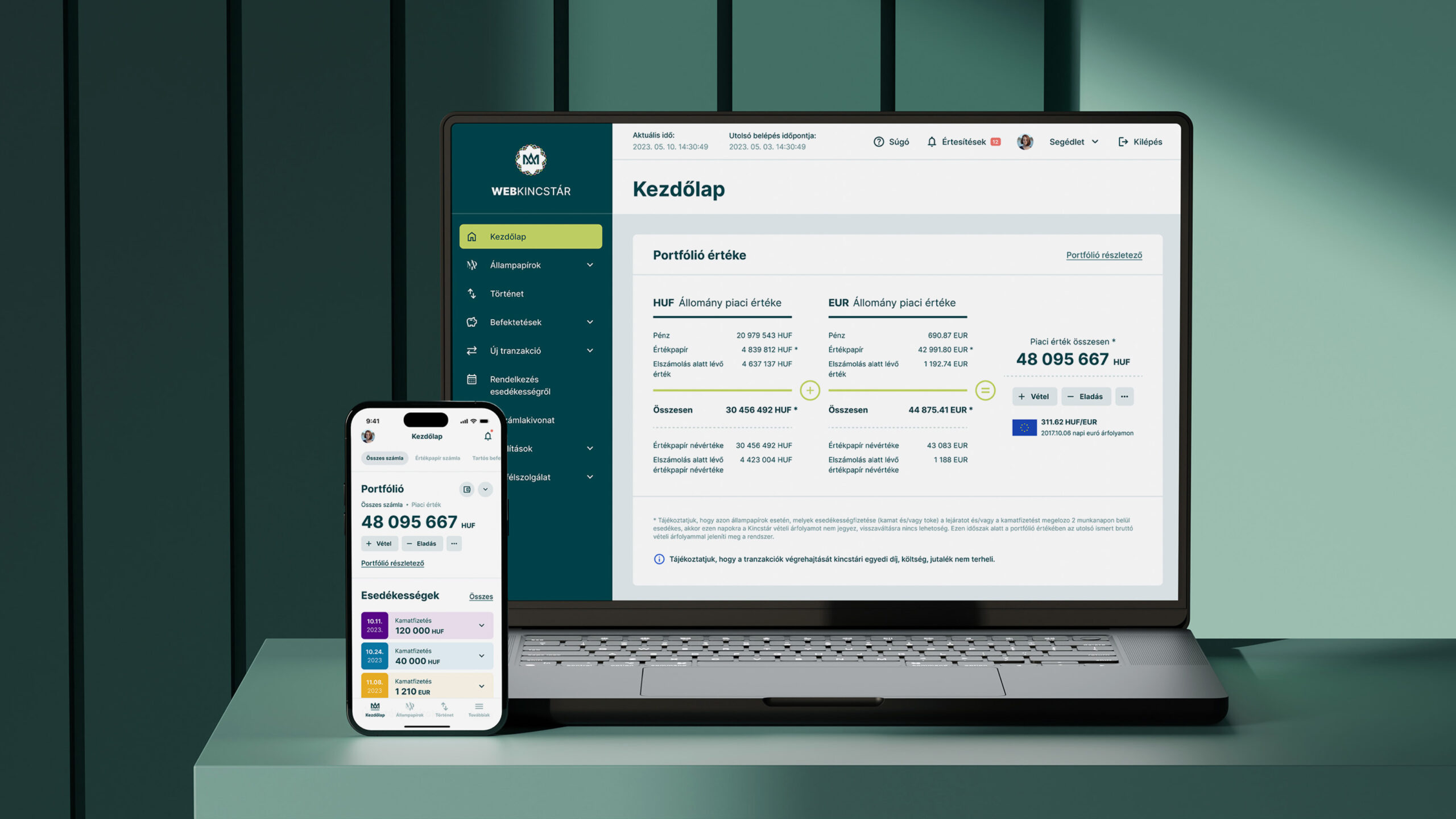



Dorsum approached us with the goal of renewing the visual appearance of the Hungarian State Treasury’s online distribution channels – Webkincstár and Mobilkincstár – and redesigning certain user interfaces to improve the customer experience.
One of the most important objectives in the system renewal was to make the products more appealing to younger generations, while ensuring that the current users would not experience any discomfort in their use. Additionally, a fundamental requirement was to ensure that the updated interfaces would reach as many users as possible, so we paid special attention to complying with accessibility guidelines.
It was crucial that the visual renewal enhance the user experience with modern UI solutions, particularly for mobile applications (iOS, Android).
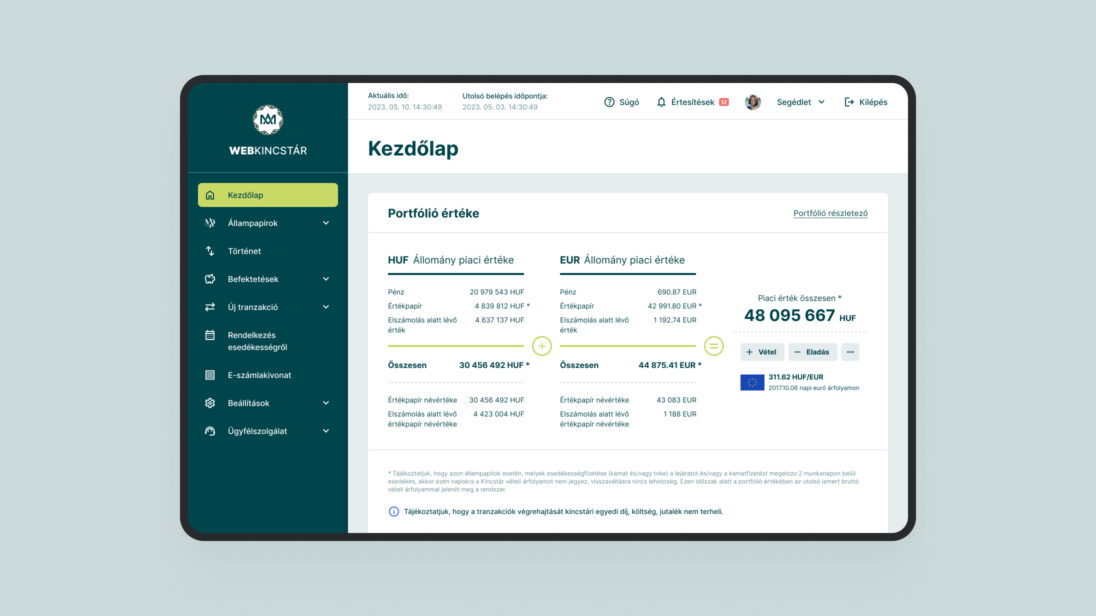
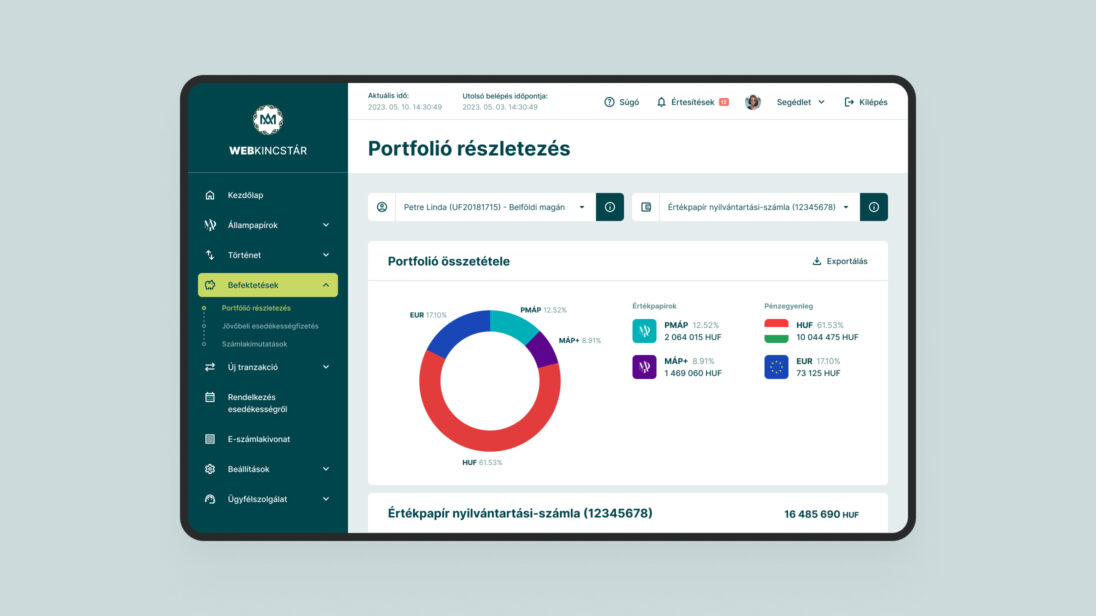
One of the biggest challenges was designing an interface that meets the needs of different user groups. The younger generation requires intuitive and modern solutions, while older users value a familiar structure and simplicity of use. Additionally, the digital interfaces had to comply with accessibility regulations.
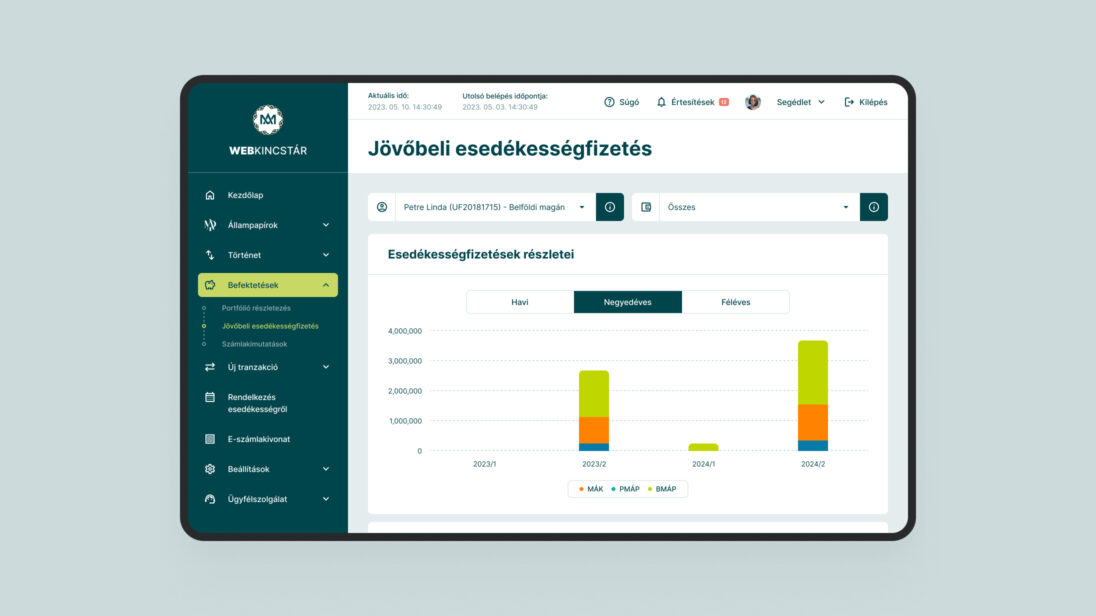

During the project, we applied various UX and UI design methods to understand the needs of the client and the users.
Optimized Core Functions: Key processes such as registration, transaction handling, and portfolio management were streamlined to improve the user experience.
A consistent design system was developed, based on Magyar Államkincstár’s visual guidelines, integrating modern UI elements.

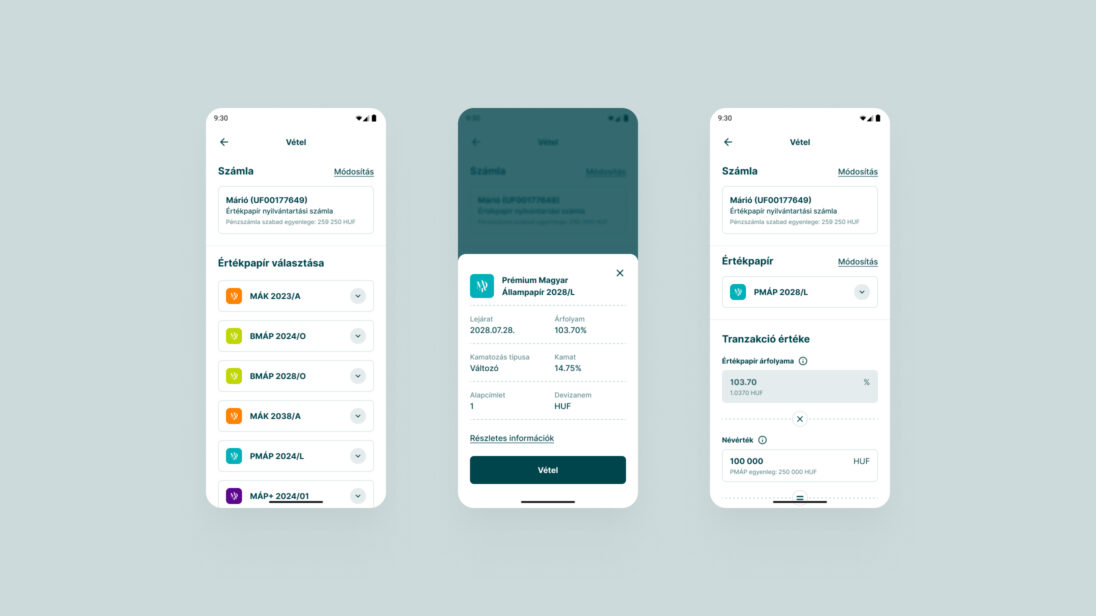
The biggest challenge was redesigning the interface to meet the needs of both younger users, who prefer modern, intuitive solutions, and older users, who value simplicity and familiarity. All of this while ensuring the platform adheres to accessibility standards.


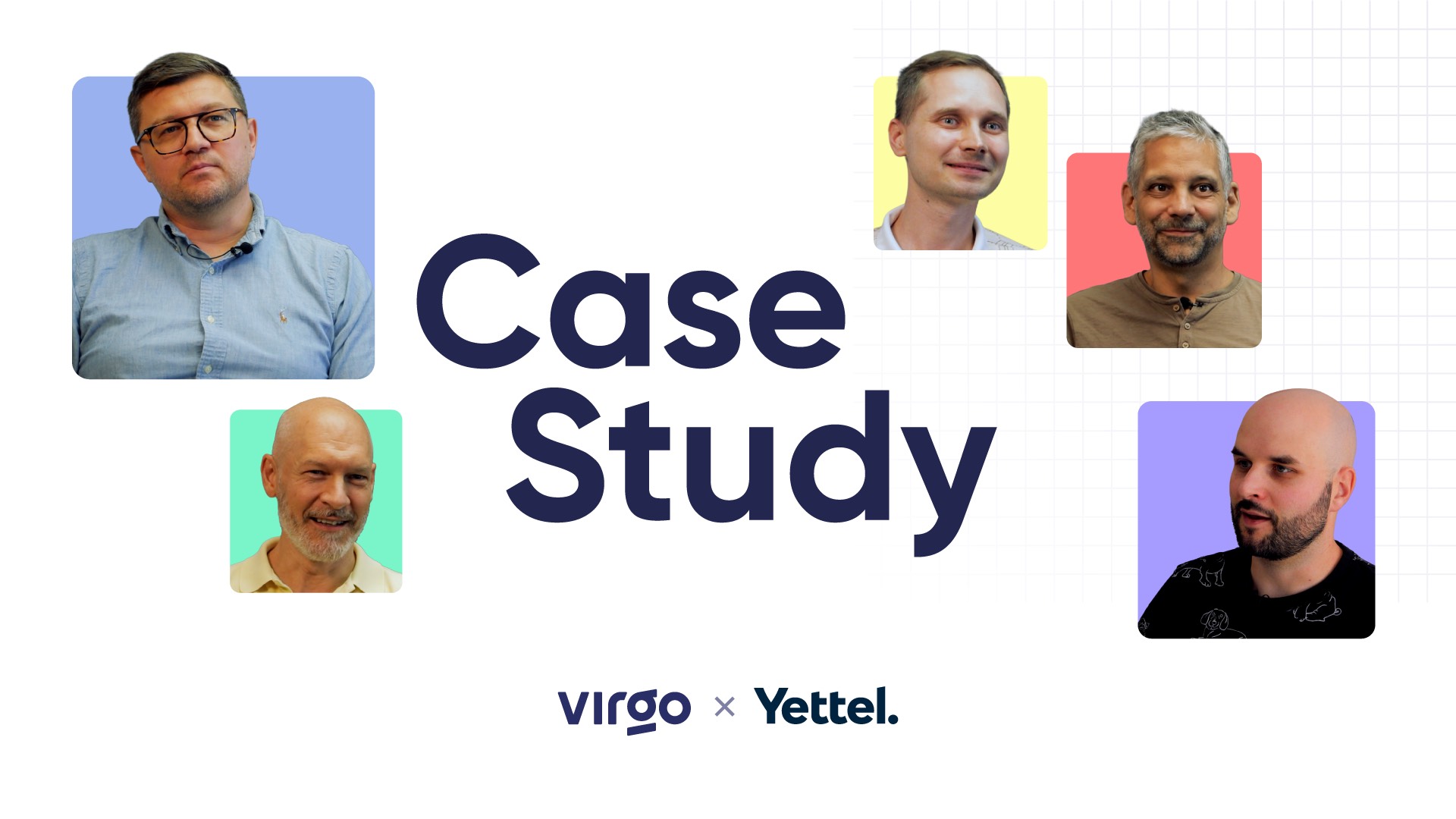
Yettel Hungary approached Virgo with the task of a comprehensive rebranding of its digital platforms including both web interfaces and the mobile application to align with its new brand identity. The assignment was distinguished by the fact that, at the outset of the project, both the new name and the visual direction were strictly confidential, and the rebranding itself was known only to a very select group of people.
The objective of the project went far beyond a simple visual makeover. The task was to ensure that Yettel’s entire digital presence would be ready for the moment of the rebranding in a way that it is functionally stable, visually consistent, and commercially secure. It was essential that users entering the new Yettel-interfaces experienced no disruption either in access to services or in the usual user journeys and processes.
Virgo supported the implementation end to end, providing Product Design, UX/UI design, front-end and back-end development, as well as continuous technical consultancy. The aim was to establish a scalable digital foundation that would not only enable the rebranding but also support Yettel’s business and product development goals in the long term.
There are projects that make history in the life of a company. The Telenor–Yettel rebranding was clearly one of them. It was not only a complete visual identity change, it all took place within a complex digital ecosystem that had been operating for years, across web and mobile applications, serving millions of users, with no margin for error.

The collaboration between Virgo and Yettel (formerly Telenor) did not begin with the rebranding itself, but much earlier, in 2017. The rebranding was already part of a long-term partnership. From the very beginning, our collaboration had been based on the approach that business goals and user experience should not come at each other’s expense, but rather reinforce one another.
Our collaboration began with the renewal of Telenor’s web interface. This had been attempted by another team previously, but without success. It is no coincidence that in-house the project was named Phoenix, as it was an initiative reborn after a previous failure, this time built on more conscious planning and stronger methodological foundations.
We would like to create something that is good for the business and good for the users — that’s the goal at the end of the day.

One of the greatest challenges was the tight deadline combined with the sheer scale of the system. Development took place in a brownfield environment, requiring integration with existing systems that had been in operation for years, while living with the consequences of previous technological and business decisions. All of this had to be achieved in a way that ensured the possibility of future expansion and development.
In the initial phase, the focus was deliberately not on innovation or impressive new features. The primary objective was the stable migration of business-critical core elements into the new system, including:
In these functions, there was no room for compromise: any error would have had immediate business and user-facing consequences. Stability and reliability therefore took priority throughout the entire project.

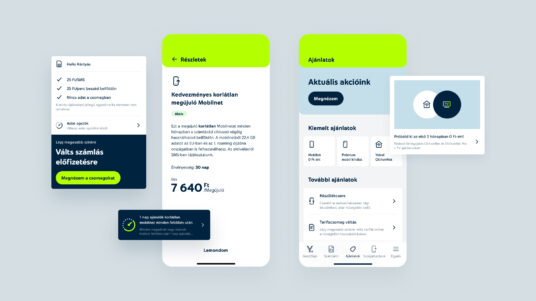
Throughout the project, we had to face not only technological but also methodological challenges. The “user stories” recorded in Telenor’s own Jira system were not, in fact, classic user stories, but rather complete user journeys and process descriptions. This caused significant difficulties during the handover process, as the client wished to validate delivery based on these items, while development tasks were structured differently, broken down into much smaller units.
This caused a major headache for both sides for a long time. Eventually, however, a mapping logic was established that built a bridge between the two approaches, making the system testable, deliverable, and meaningful from a business perspective. This kind of flexibility and shared learning ultimately added far more value to the project than a strictly “textbook” Scrum process could have.
The work was not limited only to visible front-end changes. In parallel, the technical foundations were modernized too, meaning PHP and database version upgrades as well as infrastructure and operating system enhancements.
This technical modernization went deep and often delivered results that were not immediately visible, yet it was one of the project’s greatest challenges. In a system of this scale, “working on the engine” is always risky, but unavoidable. The goal was that users would not notice any of it. These invisible yet critical interventions ensured stable and sustainable operation.
“This was an all-encompassing effort, where you couldn’t just fix only one segment of the system.” Due to the complexity of the challenge, the team often compared themselves to pop-culture heroes — Jedi, MacGyver, or Chuck Norris — and for good reason.
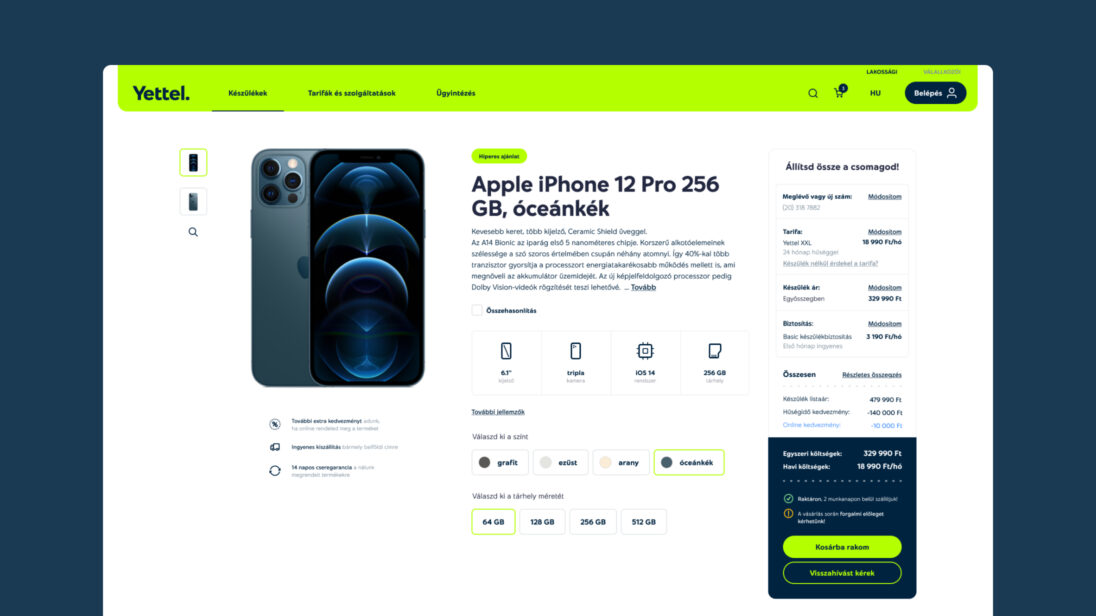
In 2022, Telenor underwent a complete brand and visual identity transition. The project was subject to extreme confidentiality: separate NDAs, isolated communication channels, and code names (YETI (from Yettel), Voldemort (He-Who-Must-Not-Be-Named), Rembrandt (because of rebranding)) were part of everyday work.
Based on the global brand guidelines, Virgo’s design team created the localized visual implementation for the Hungarian market across both web and mobile applications. Due to tight deadlines, there was no room for functional changes at this stage — the focus was on precise, consistent, and flawless execution of the new visual identity.
We were provided with a global brand identity and concept, and our task was to create the Hungarian redesign based on these foundations.

At the outset of the design and implementation process establishing a well-thought-out delivery strategy played a key role. Dedicated experts from both Virgo and Yettel were involved with clearly defined responsibilities and decision-making mechanisms.
The jointly developed roadmap milestones did not only structure the project timeline but also ensured that parallel design and development tasks remained synchronized. This coordination was essential given the tight deadlines and the high level of business risk.
New pages and components were created to support Yettel’s new tariff structure and service portfolio, while remaining aligned with established user behaviors.
On the day of the rebranding everyone was feverishly checking everything: code, databases, interfaces. One question hung in the air: Are we absolutely sure there isn’t a forgotten “Telenor” word or logo left anywhere?
One of the first checkpoints was Google. The top result: Wikipedia, still displaying the old logo. Rapid phone calls, quick reactions – and the switch was completed on one of the world’s most well-known online encyclopedias as well.
As a result of the project:
A very important takeaway and a great validation for us is that we are capable of working on a brand of this scale, delivering high quality results on time.
One of the most important characteristics of the Yettel–Virgo relationship was equality. This was not a classic client–vendor relationship, but a true partnership. Yettel underwent a lot of changes, and Virgo did its best to act as a stable, reliable anchor within a highly dynamic environment.
This approach proved successful: the Hungarian implementation included multiple solutions that were later adopted by other countries. This is not only a professional recognition but a clear validation that the team is able to create value at an international level.
Perhaps the project’s greatest achievement is that it has been proved that Virgo is capable of working on the digital presence of a global brand, delivering high quality on time, and without compromises. The web and mobile platforms operate reliably, the rebranding was executed seamlessly, and users received a cohesive, modern experience.
The takeaway is clear: truly large-scale projects are not only about technology or design. They are about trust, communication, flexibility, and the ability of a team to think together with the client — even when the project’s name itself cannot yet be spoken.